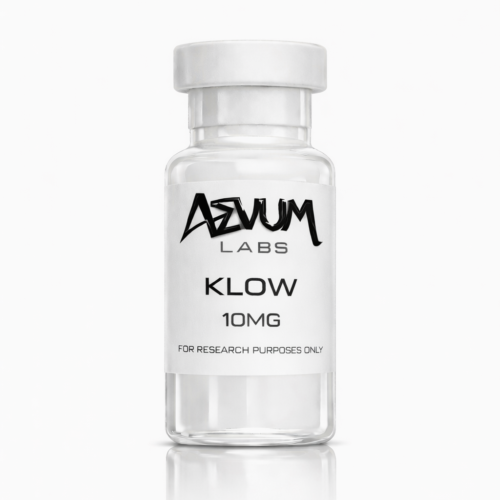


GLOW 10MG
GLOW is a research-use-only peptide derived from biologically active molecular sequences, formulated for academic and institutional research applications. This compound is intended for use in laboratory settings to study potential mechanisms of cellular signaling, protein interactions, and molecular responses under controlled conditions. It is not intended for human or animal consumption.
Research Context
Peptides are short chains of amino acids that play critical roles in biological processes, including hormone regulation, immune response modulation, and cellular communication. Research involving peptides often explores their structural and functional properties, which can inform broader biological and pharmaceutical investigations. GLOW is part of a class of peptides that may exhibit effects on cellular proliferation, differentiation, or stress responses, depending on the experimental context and conditions.
Research Overview
The peptide sequence in GLOW has been synthesized for experimental applications, potentially related to studies on:
- Protein-protein interactions and signaling pathways
- Cellular responses to growth factors or stress stimuli
- Potential applications in regenerative medicine or tissue engineering research
This product is provided for academic and research institutions to conduct controlled experiments, with emphasis on safety, purity, and compliance with research standards. It is not designed for therapeutic, cosmetic, or non-research applications.
Key Research Focus Areas
| Area of Study | Potential Applications |
|---|---|
| Cellular Signaling | Investigation of peptide-mediated activation of intracellular pathways, such as MAPK, JAK-STAT, or PI3K-AKT cascades, under various experimental conditions. |
| Cytological Responses | Evaluation of effects on cell cycle progression, apoptosis, or senescence in model systems, such as mammalian cell lines or primary cultures. |
| Tissue Morphogenesis | Examination of peptide-induced changes in extracellular matrix deposition, wound healing models, or organoid formation studies. |
| Biomarker Analysis | Detection of peptide-specific biomarkers in serum, plasma, or tissue extracts, potentially linked to disease states or physiological responses. |
Researchers should conduct experiments in compliance with institutional guidelines, standard laboratory protocols, and regulatory requirements applicable to their institution. Always verify the peptide’s compatibility with experimental conditions, including buffer systems, storage, and handling procedures.
For research use only. Not for human or animal consumption.
| Size | 10MG |
|---|